
Japan is often touted as one of the healthiest countries in the world, but as a traveler, it’s easy to fall into the “Ramen and Fried Chicken (Karaage)” trap. While delicious, a week of salt-heavy broths and deep-fried snacks can leave you feeling sluggish.
Here is how to navigate Japanese food culture like a health-conscious local.
1. Master the “Teishoku” (Set Meal)
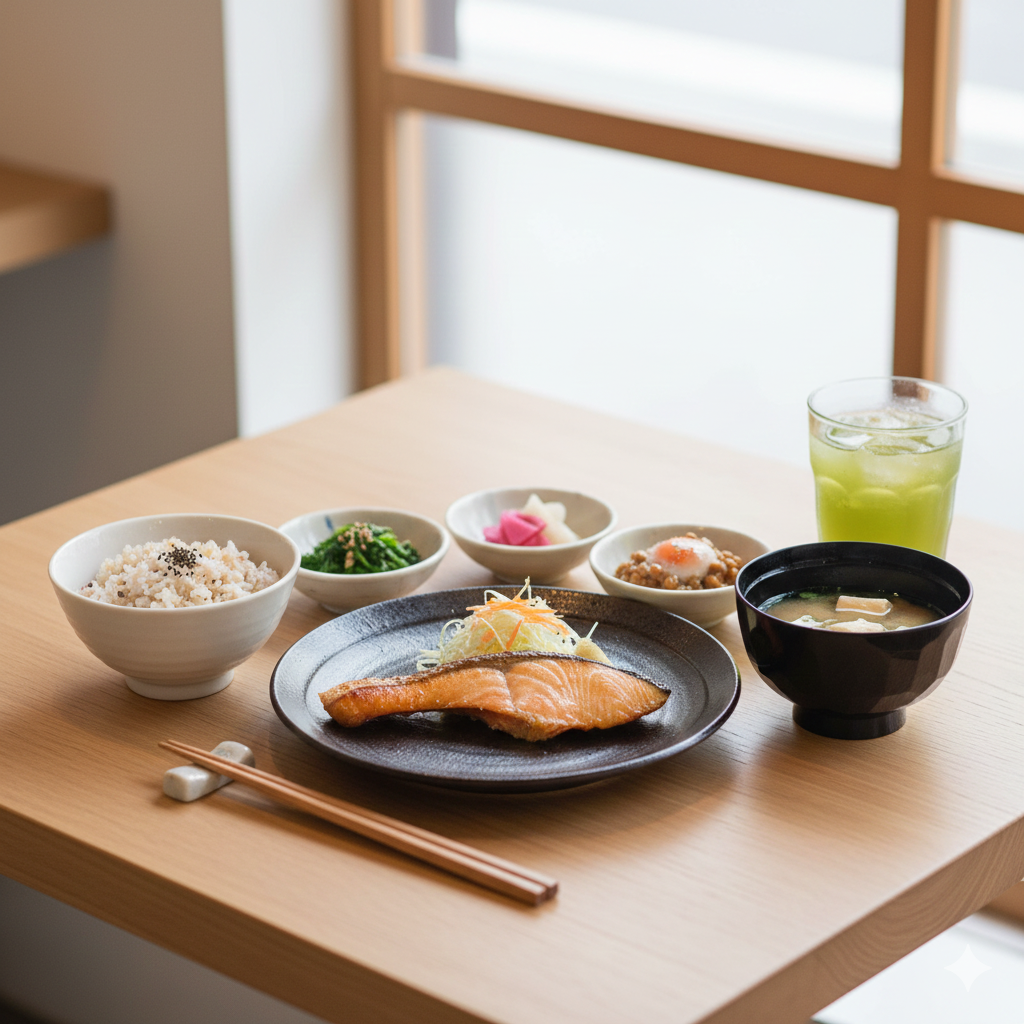
If you want a balanced meal, look for signs that say 定食 (Teishoku). This is the gold standard for healthy eating. A standard set usually includes:
- A Protein: Grilled fish (Yakizakana), ginger pork, or tofu.
- Rice: Usually white rice, but many modern spots now offer Zakkoku-mai (multi-grain rice).
- Miso Soup: Great for probiotics.
- Small Sides (Kobachi): This is where you get your nutrients—pickled vegetables, seaweed, or simmered greens.
2. The Konbini (Convenience Store) Hack
In the U.S., gas station food is a last resort. In Japan, the Konbini (7-Eleven, Lawson, FamilyMart) is a health-food oasis if you know what to grab:
- Salad Chicken: Pre-cooked, vacuum-sealed chicken breasts that are high in protein and low in fat.
- Onigiri: Stick to the “Umeboshi” (pickled plum) or “Sake” (salmon) for cleaner options.
- Oden: Available in winter—look for the simmered daikon radish, konnyaku (high fiber, zero calorie), and boiled eggs.
- Natto: If you can handle the slimy/gooey texture, these fermented soybeans are a nutritional powerhouse.
3. Watch the “Salt Trap”
The biggest health challenge in Japan isn’t fat—it’s sodium. Miso, soy sauce, and ramen broth are packed with it.
- Pro Tip: You don’t have to drink all the ramen broth! It’s perfectly acceptable to eat the noodles and toppings and leave the soup behind. This will save you thousands of milligrams of sodium.
4. Finding Your Fiber
Japanese restaurant meals can be surprisingly low in fresh, raw vegetables. To keep your digestion on track:
- Visit a Grocery Store: Look for “Depachika” (basement food halls in department stores like Mitsukoshi or Isetan). They have incredible pre-made salads and fresh fruit.
- Order “Edamame”: Almost every Izakaya (Japanese pub) serves these. They are a great source of fiber and protein.
- Green Tea: Swap soda for unsweetened green tea (hot or cold). It’s available everywhere and is full of antioxidants.
5. Deciphering Labels: A Quick Cheat Sheet
When looking at labels at the store, look for these Kanji:
- 砂糖ゼロ (Sato Zero): No sugar.
- 減塩 (Gen-en): Reduced salt/sodium.
- 無添加 (Mutanka): No additives.
- 脂肪ゼロ (Shibo Zero): Fat-free.
The “American Perspective” Note
“In the States, we’re used to ‘Large’ being the default. In Japan, portions are smaller, but the variety is higher. The secret to the Japanese diet is Hara Hachi Bu—eating until you are only 80% full. It’s a game-changer for avoiding that post-lunch food coma while sightseeing!”